Showing posts with label red wine. Show all posts

Wednesday, January 18, 2017

2011 Montecillo Rioja Crianza Tempranillo Wine Review


Have you ever wondered what the date (year on the wine bottle) meant?  Is it the year the wine was made, the year it was released, or the year the grapes were harvested? Though wine laws vary in different parts of the world, the vintage year in every case is the year the grapes were harvested.  
In the case of this week’s Wine Wednesday feature, the 2011 Montecillo Rioja Crianza Tempranillo (TEM-pra-KNEE-oh), the grapes for this wine were harvested in 2011. Tempranillo is the primary red wine varietal from the Rioja region.
This wine comes from the Rioja (Ree-OH-ha) wine region of Spain. There are four classifications for Rioja wines; Rioja, Crianza, Reserva and Gran Reserva. The difference is predominantly the amount of aging before it reaches the shelves in your wine shop. To be classified as Crianza the wine must age a minimum of one year in oak and one year in the bottle. Thus, the earliest this wine was released would have been 2013.
Crianza is likely the most widely available and is usually reasonably priced (under $15) which makes this a great “weeknight” wine. On the nose, dark fruit, baking spice and hints of tobacco. I found this wine to be fruit forward and well balanced with a nice amount of acidity. I loved the subtle smoke that lingered on the palate after the finish.
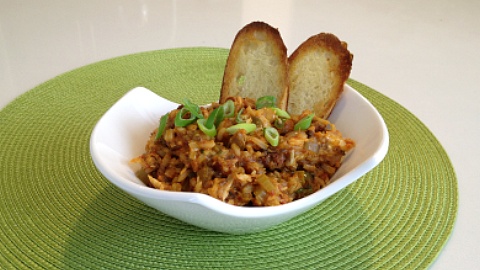
Pair with Chipotle Chili Sloppy Joes or Lasagna. Click the links below to print or save the recipes.


Wednesday, April 20, 2016

Marqués de Cáceres Rioja Crianza (2011) Wine Review


Tempranillo. It’s a varietal I’m growing increasingly fond of. Since moving to AZ  I’ve sampled Tempranillo from the Sonoita wine trail and have been delightfully impressed – more on that later. This week however, for our Wine Wednesday feature, we go to the native land of Tempranillo – Spain! The 2011 Marqués de Cáceres Rioja Crianza is from the Rioja region.  Crianza on the label is an indication of how long the wine has been aged. Spanish wines can be labeled Crianza, Reserva and Grand Reserva, Crianza being the youngest of them in terms of aging. Crianza red wines must be aged for a minimum of two years with at least one year in Oak and one year in the bottle.  


This wine is a blend of predominantly Tempranillo (85%) along with 10% Garnacha Tinta (Grenache) and 5% Graciano. On the nose -  notes of raspberry, strawberry and licorice and after a few sips - on your palate (roof of the mouth) – hints of chocolate and subtle coffee.  I found it to be a full bodied sturdy wine with ample fruit and acidity with moderate tannins - great for food pairing. We enjoyed it one night with a grilled ribeye and even more the next night with pizza.  Even better, priced as a “weekday wine”, it took the doctored up frozen pizza to another level. It seemed to love the tomato sauce on the pizza. Try also with my New Orleans style “red” Jambalaya or my Homemade Marinara. Be sure to open the wine 30 minutes prior to serving for the best experience. Click the links below to print or save the recipes. 


Wednesday, January 27, 2016

Peachy Canyon Cirque du Vin Red Blend (2011) Wine Review


Cirque du Vin (Circus of the Wine) is the name of this week’s Wine Wednesday feature from Peachy Canyon Winery (Paso Robles, CA). This wine is their version of a Bordeaux style blend taking a few liberties with some of the varietals to give it a California twist. The 2011 vintage is comprised of 44% Merlot, 38% Syrah, 12% Cabernet Sauvignon, 3% Cabernet Franc, 2% Zinfandel and 1% Petite Sirah.

It should be noted that the blend for this wine varies with each vintage. Perhaps that’s the circus here. The cast is ever changing – somewhat mysterious – even intriguing - perhaps. Who will the players be the next year?

The nose on this vintage is one of blackberry, dark plum and subtle smoke. On the palate, the same fruit with an assertive but not overt acidity and bold lingering tannins on the finish. I must note that I found this wine to be much better the second day when cloves became a pleasant part of the nose as well  On day 2, the acidity became more balanced and the tannins a touch smoother. For food pairing, I say braised dishes particularly those that include beef like my Braised Beef Tips with Mushrooms or Bouja (Harvest stew). Both are great slow cooker options. To print or save the recipes, click the links below. 


Wednesday, August 19, 2015

Féraud – Brunel Côtes du Rhone Villages Rasteau 2010 Wine Review


Here it is mid August and I’m already thinking about fall.   I see my adored Le Creuset pot looking kind of lonely on the shelf, I taste this week’s Wine Wednesday feature the 2010 Féraud – Brunel Côtes du Rhone Villages Rasteau and I’m suddenly longing for braised meats and stews.

This red wine from the Southern Rhone Valley of France is a blend of largely Grenache. AOC guidelines for Côtes du Rhone (pronounced Coat – dew- roan) Villages require wines to be at least 50% Grenache and contain a minimum of 20% Syrah or Mourvedre.  They may contain up to 20% of other permitted varietals.  Wines must also have a minimum alcohol content of 12%.

This particular wine is 14% alcohol by volume, visible in the lovely legs I noticed as I observed its deep purple color. 

On the nose - blackberry, dark fruit and baking spice, with specifically a hint of clove.  On the palate, full bodied, velvety, fruit forward with light tannins and a wonderful spice on the finish though more pepper like here than baking spice.

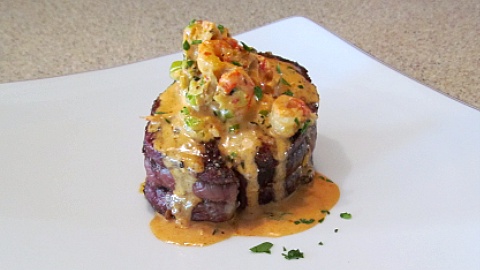
Though the wine has light tannins, with the higher alcohol content, I would avoid lighter dishes like fish, (even salmon or tuna), seafood or salads.  Beyond that, it’s quite versatile and can handle some spice. Try with a wonderful harvest stew like my slow cooker Bouja, a Cajun Filet or even  Chipotle Chili Sloppy Joes.  I think it would be wonderful with venison too for my deer hunting friends. To print or save the recipe pairing suggestions, click the links below.


Wednesday, July 29, 2015

2010 Chateau Arnaud Bordeaux Supérieur


Because I tend to have an affinity for blends, it would only seem natural that my curiosity for wine would ultimately gravitate toward Bordeaux – perhaps it should have started there. So for the second week in a row, I'll share a Bordeaux. Bordeaux wines after all, for the most part, are inherently blends either red or white.  Red Bordeaux are generally either predominantly Merlot or predominantly Cabernet Sauvignon.  Those that are predominantly Merlot are considered “right bank” and those predominantly Cabernet Sauvignon are considered “left bank”. 

The main river in Bordeaux is the Gironde.  Two smaller rivers, the Dordogne and the Garonne, feed into it. Together, the rivers are shaped almost like an upside-down Y. If you're standing in Bordeaux facing west, toward the ocean, the "Left Bank" is south of the Garonne and Gironde rivers, and the "Right Bank" is north of the Dordogne and Gironde Rivers. (The area in between is known as Entre-Deux-Mers.)

The left bank vineyards are dominated by Cabernet Sauvignon and the right by Merlot. It should be mentioned that other varietals that can be added to red Bordeaux wines in addition to Cabermet Sauvigon and Merlot are Malbec, Cabernet Franc and Petit Verdot.

This week’s Wine Wednesday feature the 2010 Chateau Arnaud Bordeaux Supérieur is an example of a red, right bank Bordeaux, predominantly Merlot (70% Merlot and 30% Cabernet Sauvignon and Cabernet Franc). How can you tell by looking at the bottle if it’s right or left bank?  Well, you sort of need to know the region. On the back of the bottle it indicates this wine is from Saint - Émilion an AOC in the Bordeaux region, which is right bank, thus likely this wine is predominantly Merlot.

On the nose - blackberry, violet and a hint of spice. On the palate, raspberry, moderate tannins (right bank are usually less tannic than left bank Bordeaux wines) and a touch of cocoa on the lingering finish.  We enjoyed this with Jambalaya one night and with Grilled Lamb Chops over Wild Mushroom Couscous and sides of Grilled Marinated Portobello and Asparagus the next. 
To print or save the recipe pairing suggestions click the links below.